
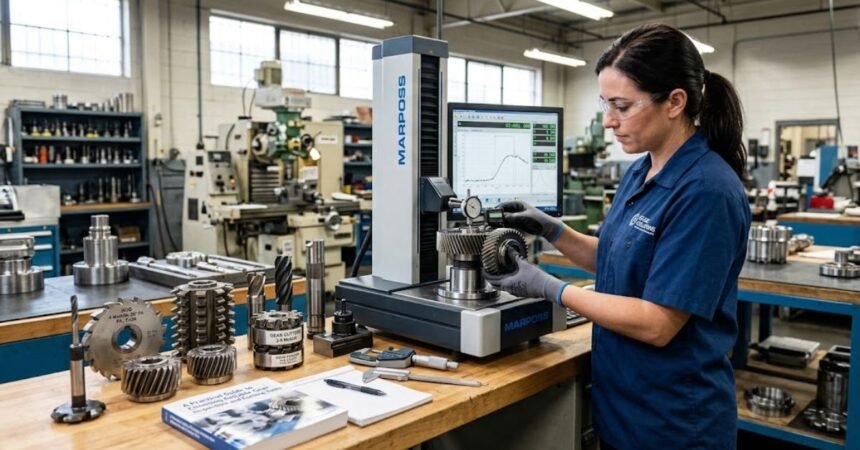
Precision is at the heart of modern gear manufacturing. Whether a company produces gears for automobiles, industrial machinery, power transmission systems, or specialized equipment, accurate dimensions and consistent tooth geometry are essential for dependable performance.
Two important areas of gear manufacturing involve reference components used for inspection and specialized tools used for cutting. Master gears help manufacturers evaluate the accuracy of finished gears, while rack milling cutters are used to produce specific tooth profiles.
Selecting suitable suppliers for these products can make a meaningful difference in production quality, consistency, and efficiency.
Understanding the Purpose of Master Gears
A master gear is a precision reference component used to check the quality and performance of manufactured gears. It is produced according to carefully controlled specifications so that other gears can be evaluated against it.
Master gears may be used to examine:
- Tooth profile
- Pitch accuracy
- Tooth alignment
- Contact pattern
- Dimensional consistency
- Functional performance
Because they serve as a reference, the accuracy of the master gear itself is extremely important.
A manufacturing company that uses an inaccurate reference component may receive misleading inspection results. This is why choosing dependable master gears distributors is an important part of establishing an effective gear inspection system.
Why Master Gear Accuracy Matters
Gear inspection is not simply about checking the overall size of a component. The relationship between individual teeth, pitch, profile, and alignment can have a significant impact on how the gear performs.
Accurate master gears can help manufacturers identify variations before components move further into production or reach the customer.
They can support:
- Better inspection confidence
- Improved quality control
- Consistent gear evaluation
- Early detection of manufacturing variation
- More reliable production standards
- Better process monitoring
For manufacturers producing precision components, these benefits can help maintain quality across production batches.
Choosing the Right Master Gear Distributor
Selecting a distributor requires more than checking product availability. Businesses should consider the distributor’s understanding of precision gear inspection and their ability to provide products that match specific requirements.
Important factors include:
Product Accuracy
The master gear must meet the required dimensional and geometric specifications.
Manufacturing Source
Understanding where the product is manufactured and how quality is controlled can provide additional confidence.
Technical Knowledge
A distributor with knowledge of gear inspection can help customers identify appropriate specifications.
Product Consistency
Industrial buyers often require reliable results across repeated purchases. Consistent product quality is therefore important.
Customer Support
Clear communication and technical assistance can make the purchasing process easier, particularly for specialized requirements.
A distributor that understands the application can provide greater value than a supplier focused only on basic product delivery.
The Role of Rack Milling Cutters
Rack milling cutters are specialized tools used for producing rack teeth and related profiles. They are designed according to specific geometric requirements so that the desired tooth form can be machined accurately.
The quality of the cutter has a direct effect on the finished component. A cutter with incorrect geometry can lead to dimensional variation and inconsistent tooth profiles.
For this reason, manufacturers should carefully evaluate a rack milling cutter company before selecting tooling for their production requirements.
Important Factors When Selecting a Rack Milling Cutter
Different rack applications can require different tooling specifications. Before choosing a cutter, manufacturers should consider several factors.
Tooth Profile
The cutter must be suitable for the required rack tooth geometry.
Module
Module is an important specification in gear and rack manufacturing. The cutter should match the intended component design.
Pressure Angle
The pressure angle influences tooth geometry and must correspond to the required design.
Cutter Material
Tool material can affect durability, cutting performance, and service life.
Workpiece Material
The material being machined influences the cutting conditions and tool requirements.
Production Volume
High volume production may require tools designed for consistent performance over longer operating periods.
How Rack Milling Supports Precision Manufacturing
Rack components are used in systems where linear and rotary motion need to work together. Steering mechanisms, automation equipment, machinery, and motion systems are examples where rack and gear arrangements can play an important role.
The accuracy of the rack teeth influences how smoothly the system operates.
A properly manufactured milling cutter can help produce:
- Consistent tooth geometry
- Accurate dimensions
- Better surface quality
- Repeatable production
- Reliable component performance
Tool selection therefore has an important place in the overall manufacturing process.
Evaluating a Rack Milling Cutter Company
When comparing suppliers, manufacturers should look beyond price. Precision tooling requires appropriate manufacturing capabilities and quality control.
A suitable supplier should ideally have experience with:
- Gear and rack tooling
- Precision machining
- Tool material selection
- Dimensional inspection
- Customized specifications
- Industrial production requirements
Technical knowledge is particularly valuable when the customer requires tooling for a specialized rack design.
Connecting Inspection with Production Quality
Master gears and rack milling cutters perform different functions, but both contribute to manufacturing quality.
A master gear provides a reliable reference for inspection. A rack milling cutter helps create the required tooth geometry during production.
When these two areas are handled carefully, manufacturers can establish better control over both production and inspection.
This connection is important because producing an accurate component is only one part of quality management. Manufacturers also need reliable methods for verifying that the finished component meets the required specifications.
Benefits of Reliable Gear Tooling
High quality tooling can contribute to several areas of production.
Better Consistency
Accurate tools help maintain similar results across multiple components.
Improved Productivity
Reliable tooling can reduce interruptions caused by repeated adjustments or tool related issues.
Lower Rework Risk
Consistent machining and inspection can reduce the likelihood of components requiring additional correction.
Better Process Control
Accurate reference equipment and cutting tools help manufacturers monitor production more effectively.
Greater Confidence
When tools and inspection components meet the required standards, production teams can have greater confidence in their results.
Applications of Precision Gear and Rack Tools
Precision gear tools are used across many industries where accurate motion and power transmission are important.
These industries can include:
- Automotive manufacturing
- Industrial machinery
- Power transmission
- Automation systems
- Engineering equipment
- Material handling
- Specialized mechanical products
Each application can have different requirements, so tooling should be selected according to the actual component and production environment.
Why Supplier Experience Should Matter
Specialized industrial tooling is not always a standard purchase. Buyers may need specific dimensions, materials, accuracy levels, or inspection requirements.
An experienced supplier can understand these details and help customers select appropriate products.
When evaluating master gears distributors, manufacturers should consider product quality, technical expertise, consistency, and support.
Similarly, when choosing a rack milling cutter company, it is useful to evaluate manufacturing capabilities, tooling experience, inspection standards, and ability to meet application specific requirements.
A Simple Approach to Tool Selection
Manufacturers can make better purchasing decisions by following a structured evaluation process.
Before placing an order, consider:
- Identify the component requirements.
- Confirm tooth profile and dimensions.
- Determine the required accuracy.
- Review workpiece material.
- Check machine compatibility.
- Consider expected production volume.
- Evaluate tool material.
- Review supplier experience.
- Confirm inspection standards.
- Discuss specialized requirements with the supplier.
This approach can help businesses choose tools that are suitable for their actual production conditions.
Supporting Long Term Manufacturing Quality
The right tooling can contribute to more than one production cycle. When tools are manufactured accurately and maintained correctly, they can support consistent performance over time.
For manufacturers, this means that selecting a supplier should be viewed as a long term decision rather than a simple purchase.
Reliable tooling can support stable production, accurate inspection, and better confidence in finished components.
Why SS Tools Can Be Considered
SS Tools focuses on precision gear tooling for industrial manufacturing requirements. Businesses looking for specialized solutions can assess products based on their accuracy, manufacturing quality, material options, and suitability for particular applications.
Companies searching for dependable master gears distributors can compare suppliers based on product reliability and technical support. Manufacturers requiring rack tooling can similarly evaluate a rack milling cutter company according to its experience, precision capabilities, and understanding of customer requirements.
Conclusion
Accurate production and dependable inspection are closely connected in gear manufacturing. Master gears provide an important reference for evaluating finished components, while rack milling cutters help manufacturers produce accurate tooth profiles for rack applications.
Choosing reliable master gears distributors can support better inspection confidence and consistent quality control. At the same time, working with an experienced rack milling cutter company can help manufacturers obtain tooling suited to their specific machining requirements.
By considering product accuracy, material, machine compatibility, production volume, supplier expertise, and quality standards, manufacturers can make more informed tooling decisions and build a stronger foundation for reliable industrial production.